
Hong Kong’s role in connecting the Greater Bay Area with the world depends not only on bridges, border checkpoints and flows of people, but on whether cross-border data, business responsibility and cultural co-production can be turned into predictable, trustworthy urban institutional interfaces that also allow differences to remain.
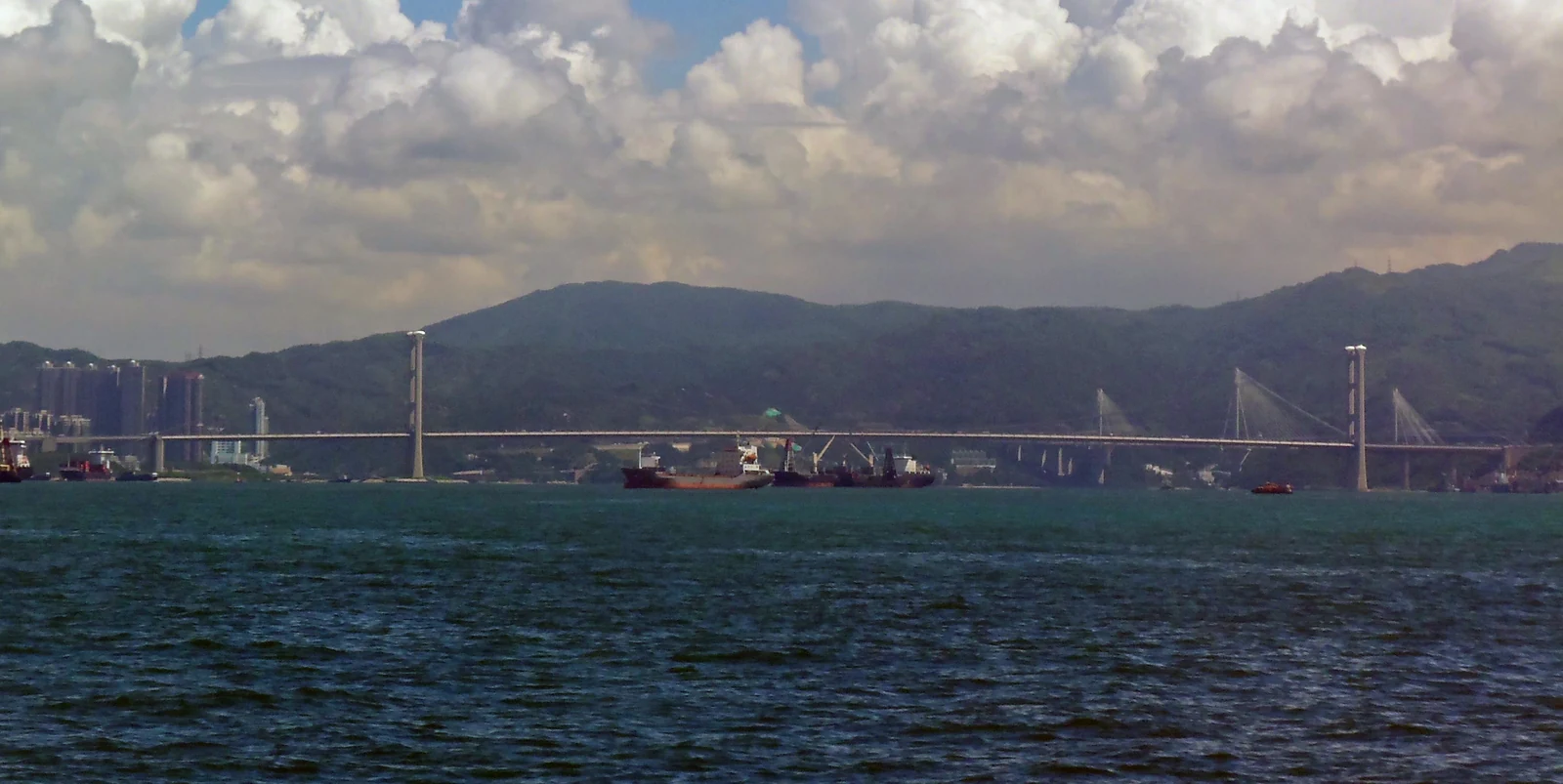
The distance between cities has never been just the number of kilometres on a map. For Hong Kong, connecting the Greater Bay Area and then reaching the world depends on bridges, railways and border checkpoints, but also on a set of rules that allows data, capital, talent and works to move across borders. The real question is not “whether Hong Kong is closer”, but whether different cities can learn from one another and do business with one another after drawing closer, while still allowing each to retain its differences. This is an urban network with the speed of hardware, but also the limits of institutions.
How cities can inspire one another: beyond a bridge, a set of rules
The Hong Kong-Zhuhai-Macao Bridge is the most visible connection. According to official data cited by the Chinese government, more than 27 million passenger trips crossed through the Zhuhai port in 2024, an increase of 72% year on year; vehicle trips exceeded 5.55 million, an increase of 71%. These figures show that transport demand has been released: Hong Kong, Zhuhai and Macao are no longer merely three neighbouring names, but a living and economic space in which people and vehicles travel back and forth repeatedly. Yet port traffic is not synonymous with integration; crossing time, vehicle eligibility, connecting costs and different legal systems still determine who can truly use this passage.
Cities should understand mutual inspiration as transforming experience, not copying landmarks. Hong Kong’s international finance, professional services and rule-of-law tradition, Shenzhen’s technology industries, Guangzhou’s commercial, trade and research strengths, and Foshan’s manufacturing and cultural crafts each offer different solutions. Whether they can learn from one another depends on whether cities are willing to lay their problems bare: How can cross-border data move lawfully? How can medical, educational and professional qualifications be mutually recognised? If a passage has only engineering standards but no connection between everyday institutions, it will merely send people to the entrance of another system.
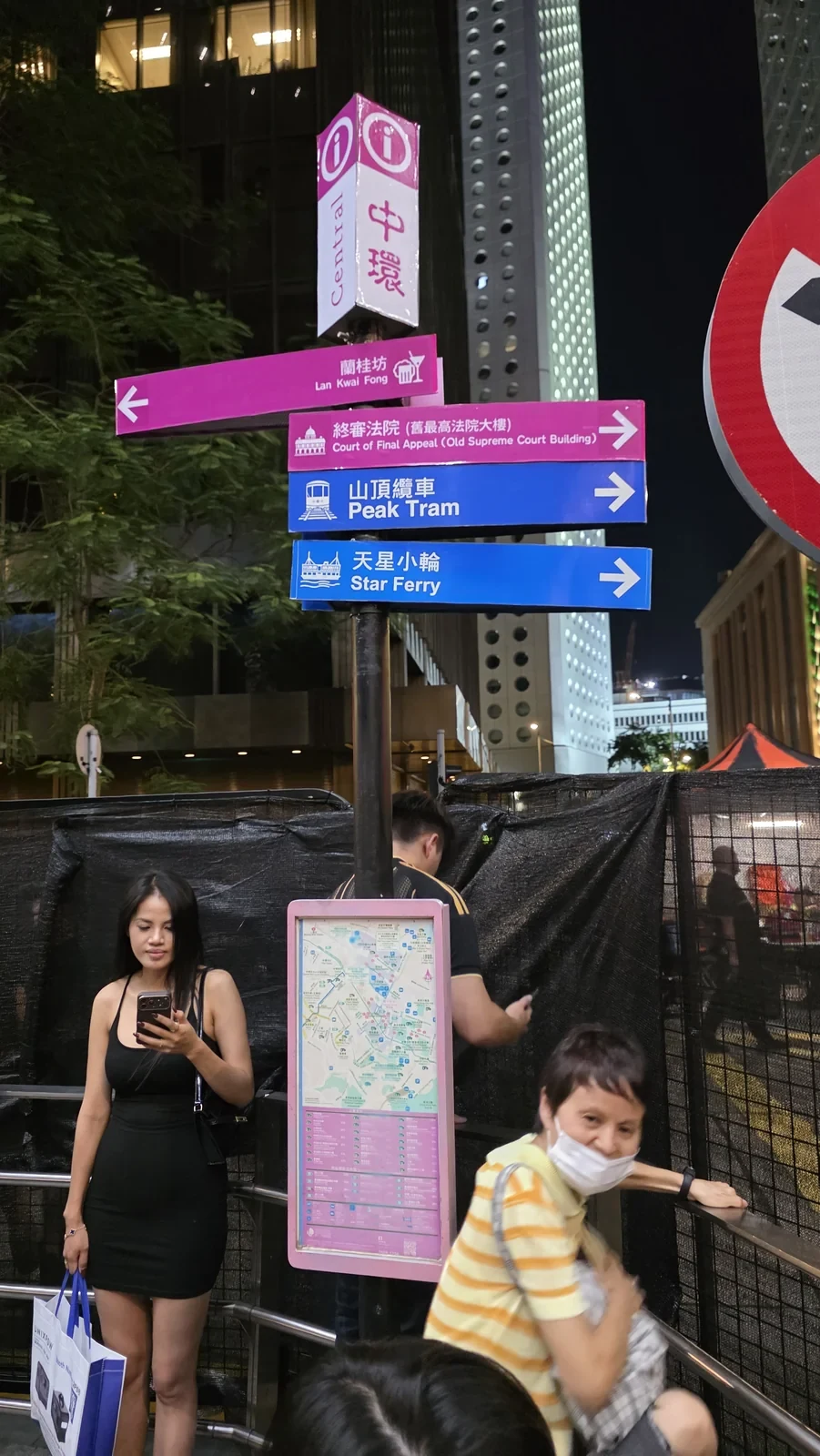
How business crosses borders: it is not only goods that move
The next threshold for inter-city business is data. Hong Kong’s Digital Policy Office records that Hong Kong’s Innovation, Technology and Industry Bureau and the Cyberspace Administration of China signed a memorandum of understanding on 29 June 2023 to promote cross-border data flows in the Greater Bay Area; the standard contract for cross-border flows of personal information in the Greater Bay Area was published in December 2023, while the Mainland’s Provisions on Facilitating and Regulating Cross-Border Data Flows took effect on 22 March 2024. The official explanation also lists requirements including security assessments, standard contracts, personal-information protection certification and the identification of important data.
The arrangement is not a blanket permit granted by a single signature: it places business facilitation alongside privacy and data security. For financial, medical, logistics and innovation-and-technology companies, whether customer data, risk models or supply-chain information can be handled by another city often affects the speed of expansion more than freight costs do. Institutions also have boundaries: a standard contract does not equal automatic compliance, and a policy arrangement does not mean that every small and medium-sized enterprise can afford the legal, security and compliance costs. Hong Kong’s value as a connector lies in translating international norms, the Mainland market and business practice into an operable interface, rather than merely proclaiming the “one country, two systems advantage”.
From the Greater Bay Area to the world, connection is not a one-way export. Hong Kong companies can use Bay Area supply chains and research-and-development networks to enter Southeast Asia, the Middle East or Europe; overseas businesses may in turn use Hong Kong as a window into Mainland cities. But a window cannot replace a room: genuine cross-border business requires clear responsibility, dispute resolution, payment and data arrangements, and must also confront geopolitics, export controls and market cycles. The denser the urban network, the more sensitive it may also be to disruption.
How culture connects people: co-production, not just touring exhibitions
Cultural connection is easiest to write as a festival list, yet it is the clearest test of whether cities are willing to share the power to shape the narrative. A UNESCO intangible cultural heritage training workshop held in Foshan in October 2024 brought together 22 educators, cultural-sector figures, bearers and practitioners from Guangdong, Hong Kong and Macao to discuss the 2003 Convention, respect for communities and the risks of excessive commercialisation of intangible heritage. UNESCO’s event record specifically notes that this was only the beginning of efforts to promote coordinated safeguarding. Its lesson is that cultural exchange is not only about taking the same programme to different cities; it is about allowing heritage-bearing communities to participate in deciding what may be changed and what must not be turned into a commodity.
Cultural cooperation between Hong Kong and the Greater Bay Area already has a measurable record. According to Hong Kong government information compiled on the UNESCO cultural policy platform, from 2018–19 to 2022–23, the Leisure and Cultural Services Department and Bay Area venues jointly supported 54 productions and 141 touring and exchange events; in 2023–24, they supported 24 productions and more than 100 events, attracting more than 400,000 audience members. The figures demonstrate the scale of activity, not that audiences have already developed a shared cultural outlook; the latter depends on long-term education, creators’ income, copyright and venue networks.
This network can also extend towards the world. In 2024, the West Kowloon Cultural District Authority signed memoranda of understanding with 21 arts and cultural institutions from 11 countries. The cooperation covered exhibition co-production, touring exhibitions, collection sharing, conservation, digitisation and research; the West Kowloon announcement lists partners including Tate, Centre Pompidou and the Getty Conservation Institute, as well as Mainland institutions in Shanghai and Chongqing. A memorandum is the starting point for building trust, not the endpoint of results; whether joint curatorship, resource sharing and fairer mobility can be delivered will determine whether Hong Kong truly becomes a cultural intermediary.
The limits of connection are precisely where a city’s responsibility begins
Hong Kong’s starting point, its footing in the Greater Bay Area and its links to the world cannot be summed up only as “faster, bigger and more international”. Hardware brings cities closer; software determines who can pass through. Business rules enable data to move, but must also preserve accountability. Cultural cooperation opens stages, but must avoid grinding local differences into a single marketable image. What is most valuable between cities is not the elimination of borders, but the creation of cross-border interfaces that are predictable, trustworthy and open to correction.
Hong Kong’s role, therefore, is not to speak for every city, but to turn friction between different systems into the capacity to cooperate: first learning in the Greater Bay Area how to solve everyday problems together, and then carrying that experience to the wider world. If connection can let cities inspire one another, let businesses cross borders responsibly, and let communities define culture together, it is not merely a transport line but a public capacity able to withstand distance, difference and constraint.
